Reading study / 02 / Timing
A frame takes time
A digital photograph is often treated as one instant. With a rolling shutter, different rows begin their exposures at different times. A single finished frame can therefore contain a small sequence of moments.
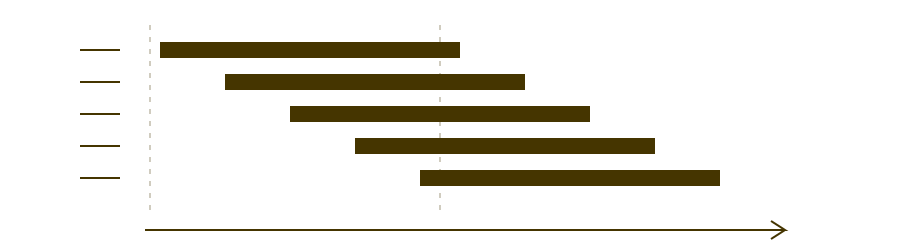
A frame assembled from rows
A rolling shutter exposes sensor rows in succession. Even when each row has the same exposure duration, its start and finish are offset from neighboring rows. When the scene is still, that difference may have little visible effect.
If an object moves during the progression, its position can change before the later rows are captured. A straight moving edge may appear tilted. The resulting shape reflects the timing of capture as well as the shape of the object.
Skew is different from blur
Motion blur describes movement during an individual exposure. Rolling-shutter skew describes differences between the moments represented by different rows. A short exposure can make an edge crisp while leaving it visibly tilted. These two effects need separate explanations.
Global shutter exposure begins and ends together across the sensor. Reading the stored values can still take time afterward. The timing distinction concerns when light contributes to the image, rather than whether all the data leaves the sensor simultaneously.
A hypothetical moving edge
Imagine a vertical strip moving sideways past a stationary camera. The upper rows record it first. By the time lower rows record it, the strip has moved. Connecting those observations into one image produces a diagonal edge, even though the strip itself stayed vertical.
Now imagine the camera moving past a stationary strip. Relative motion can produce a similar effect. An unusual shape in a photograph therefore does not, by itself, establish that the object physically bent. This example is illustrative and is not a description of company equipment or testing.
When comparing images of movement, consider exposure duration, row timing and relative motion separately. Frame rate alone does not completely describe that relationship. A careful explanation names which timing quantity changed before attributing a visible difference to the shutter.